Datalogging
Long-term monitoring with climatic sensors, such as moisture meters and thermocouples, makes it possible to prevent damage or monitor the effect of interventions.
We help think through the design of the monitoring system, advise on the right sensors and assist in the interpretation of the often complex measurement data.

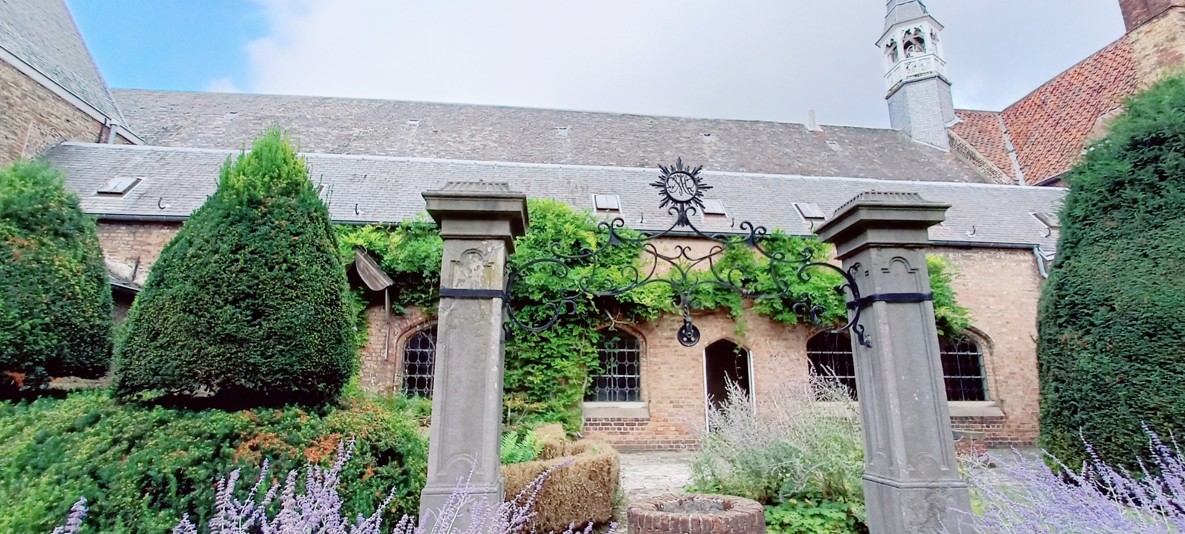
Conservation and restoration advice
We formulate substantiated recommendations for the preservation and restoration of architectural heritage and historic building materials. In doing so, we take into account material properties, damage patterns and the heritage value of the building.
How does the process work?
1. Objective and methodology
Together with the relevant partners, we determine which parameters are important to monitor: moisture, temperature, salt migration, weathering, the effectiveness of treatments, etc. Based on this, we draw up a monitoring strategy tailored to the building and the purpose of the monitoring.
2. Design and installation of measuring points
We install sensors, take reference samples or define measurement zones on or inside the building. This is done with a view to discretion and minimal impact, in keeping with the heritage context.
3. Regular monitoring and analysis
We collect and analyse measurement data at fixed intervals or continuously, depending on the system. This enables us to detect changes in material behaviour, moisture distribution or environmental influences, and to assess risks in good time.
4. Report and recommendation
Based on the measurement results, we draw up recommendations for maintenance, further interventions or adjustments to usage or ventilation. Monitoring thus supports sustainable and well-considered long-term care for heritage.
Applications: Evaluation of drying processes, Monitoring of consolidation work or injections, Detection of seasonal influences or building physics issues, Long-term strategy for maintenance planning.